
What Is Premises Liability?
Premises liability is a simple idea in plain English: if you own or control a property, you have a duty to keep it reasonably safe for the people you allow on it.
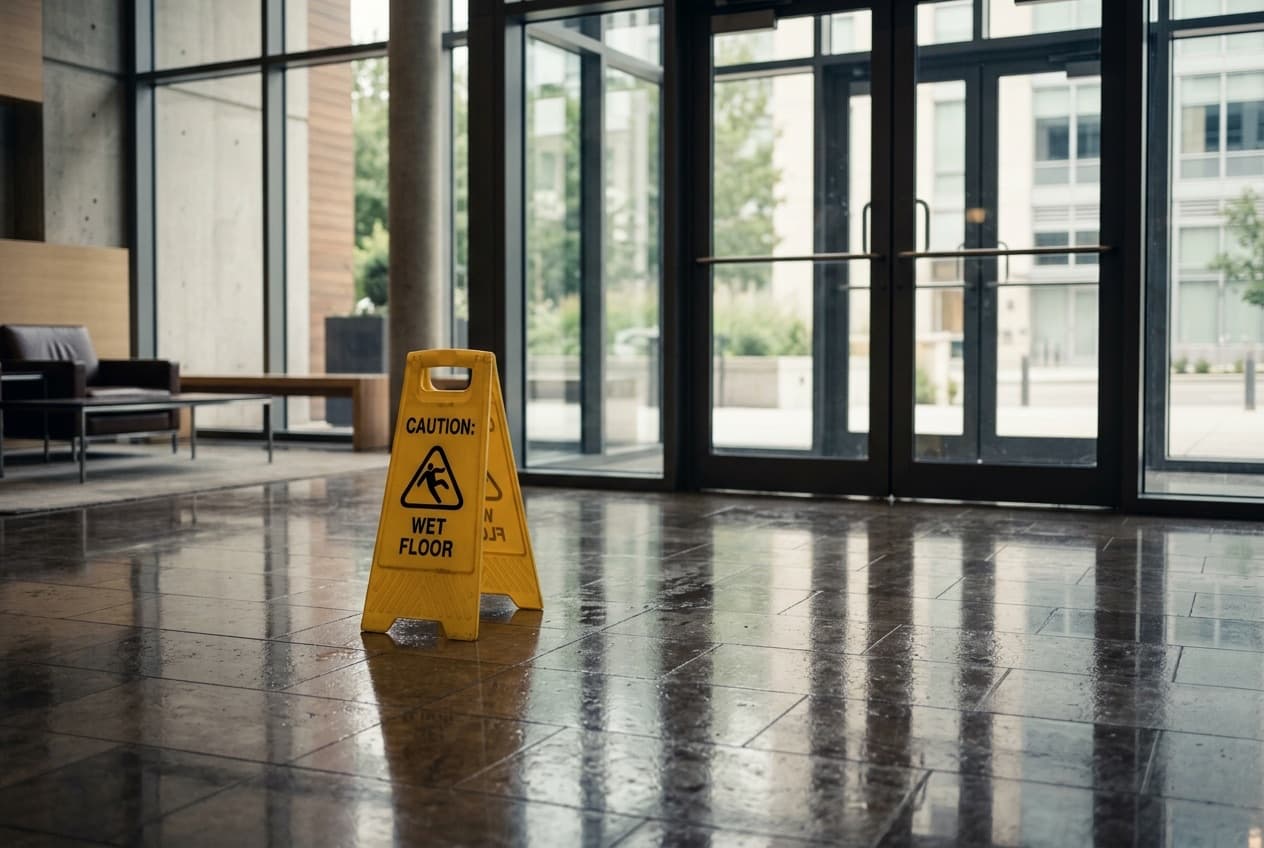
That duty applies to homeowners, businesses, landlords, property managers, and the hosts who list homes for rent. When they ignore a known danger, a broken stair, a slick floor with no warning, a pool with no fence, a missing carbon monoxide detector, and someone gets hurt, the injured person may have a premises liability claim.
It does not mean an owner is responsible for every accident. The law asks whether the owner acted reasonably. If they did what a careful owner would do, there may be no claim. If they ignored a hazard they knew about (or should have known about), they may be liable.
Falls are one of the most common premises-liability injuries. The CDC reports that about 3 million emergency department visits happen each year from falls among older adults alone (CDC). Many of those falls trace back to a hazard the property owner could have fixed.
Injured at a short-term rental? Talk to our team today, free of charge.
The Four Parts of a Premises Liability Claim
To win a premises liability claim, the law generally asks you to show four things. Lawyers call these the elements of the claim. Here they are in plain terms.
- Duty. The owner or person in control of the property owed you a duty to keep it reasonably safe. If you were lawfully there, a guest, a customer, a renter, this duty almost always exists.
- Breach. The owner broke that duty. They created a hazard, ignored one they knew about, or failed to inspect and fix a danger they should have found. This is called negligence.
- Causation. The breach actually caused your injury. The broken railing is why you fell; the missing detector is why you were poisoned. There has to be a real link between the failure and the harm.
- Damages. You suffered real losses, medical bills, lost wages, pain, or worse.
If even one of these is missing, the claim gets harder. The good news: you do not have to figure this out yourself. Sorting through duty, breach, and causation is exactly what we do in a free review.
Who the Law Protects: Visitor Categories, Simplified
How much an owner owes you can depend on why you were on the property. The law has traditionally sorted visitors into groups. Here is the plain-English version.
- Invitees. People invited onto the property for the owner’s benefit, customers in a store, or a paying guest at a vacation rental. An invitee is owed the highest duty of care, including reasonable inspection for hidden dangers.
- Licensees. Social guests and others allowed on the property for their own reasons. A licensee is owed a duty to be warned of known dangers.
- Trespassers. People on the property without permission. Owners generally owe them the least, though special rules can apply, such as for children.
Many states have moved toward a single, simpler standard: owners must use reasonable care to keep their property safe for anyone lawfully there, no matter the label. Either way, a paying short-term rental guest is in the strongest position. You were invited, you paid, and you were owed a safe place to stay.
What Property Owner Negligence Looks Like
Property owner negligence is rarely dramatic. It is usually a small thing that was ignored until it hurt someone. Common examples include:
- Broken or missing stair railings and loose steps
- Wet or slick floors with no warning sign
- Poor lighting in stairwells, walkways, and parking areas
- Pools and hot tubs with no fence, no barrier, or broken drains
- Missing or dead smoke and carbon monoxide detectors
- Faulty wiring, ungrounded outlets, and other code violations
- Decks, balconies, and stairs that collapse under normal use
- No locks, broken locks, or no security where crime was foreseeable
Any one of these can be the difference between a safe visit and a life-changing injury.
Premises Liability at Short-Term Rentals: Our Focus
Premises liability is the legal backbone of everything our firm does. Most premises cases involve a store, an apartment, or a business. Ours center on a newer and especially risky setting: the short-term vacation rental.
When you book an Airbnb or Vrbo, you are a paying guest in a private home you have never seen. There is often no on-site manager, no professional safety staff, and no one to catch a hazard before you do. The host had a duty to make the home reasonably safe, and when they cut corners, guests get hurt.
We help injured guests pursue claims for the most common rental hazards:
- Carbon monoxide poisoning from missing detectors or faulty heaters
- Pool and hot tub drowning and near-drowning
- Slips, trips, and falls on stairs and walkways
- Balcony, deck, and stair collapse
- Fires and burns
- Negligent security and assault where crime was foreseeable
- Hidden cameras and invasion of privacy
- Wrongful death when a guest does not come home
To see how fault is shared in these cases, read who is liable for a vacation rental injury. If your stay was on a specific platform, start with Airbnb injury claims or Vrbo injury claims.
Who Can Be Held Liable
In a premises liability claim, more than one party may share responsibility:
- The owner or host who controlled the property and let the hazard exist.
- A property manager or management company hired to maintain and inspect the home.
- The rental platform, depending on the facts, including its safety representations and host standards.
- Contractors and services, a pool company, electrician, or repair crew whose work created the danger.
Liability depends on the specific facts. A free case review is the way to find out who is responsible for what happened to you.
What a Premises Liability Claim May Cover
If your claim succeeds, you may be able to recover compensation for losses such as:
- Medical bills, emergency care, hospital stays, surgery, and future treatment
- Lost wages, time off work and lost earning ability
- Pain and suffering, the physical and emotional toll of your injury
- Wrongful death damages, for families who lost a loved one
Learn more about compensation in a vacation rental injury claim. There are also deadlines. Every state has a statute of limitations, so it helps to talk to a lawyer early.
Why Call Traction Law Group
No fee unless we win. You pay nothing up front, and we only get paid if we recover money for you.
We take on the big companies. Platforms and property owners have lawyers and insurers. We push back on your behalf.
Available 24/7. Talk to a real person about your premises liability case any time.
Results-driven representation. We push for the strongest outcome your facts support, and we tell you honestly where your case stands.
Still have questions? Visit our FAQ or learn what to do after a rental injury.